

The Jackery Explorer 300 has been Amazon’s most purchased entry-level power station for three years running. That kind of staying power in a category that moves fast means one of two things: it’s genuinely good, or the marketing is genuinely good. After putting it through real-world use across weekend camping, a two-day power outage, and a van trip, the answer is mostly the first one, with a few honest caveats that most reviews skip over.
This isn’t the newest or most technically impressive station in the sub-$300 category. The battery chemistry is lithium-ion, not LiFePO4, and in 2026, that’s a legitimate trade-off worth understanding before you buy. But for the right use case, occasional camping, light emergency backup, and keeping devices charged when you’re away from a wall, the Explorer 300 still earns its reputation.
Here’s everything you need to know before buying.
📋 In This Review
Quick Specs
| Spec | Detail |
|---|---|
| Capacity | 292Wh |
| Battery Type | Lithium-ion (NMC) |
| Cycle Life | ~500 cycles to 80% capacity |
| AC Output | 300W continuous / 500W surge |
| USB-C Output | 60W PD |
| USB-A Output | Quick Charge 3.0 (18W) |
| DC Output | 12V / 10A carport |
| AC Outlets | 2 x pure sine wave |
| Wall Charge Time | ~3 hours (60W USB-C) |
| Solar Input | Max 100W (MPPT controller) |
| Car Charge | 12V / 24V carport |
| Weight | 7.1 lbs / 3.2 kg |
| Dimensions | 9.1″ x 5.2″ x 7.8″ |
| Warranty | 2 years |
| Current Price | ~$179–$229 on Amazon |
Design and Build
The Explorer 300 is compact in a way that actually means something. At 7.1 lbs it’s light enough to carry one-handed without thinking about it, and the dimensions, roughly the size of a small lunchbox, mean it fits in the footwell of a car, the top of a duffel, or a large day pack without reorganizing everything around it.
Jackery’s signature orange and black colorway is either a love or hate thing. Practically, the bright orange makes it easy to spot in a dark tent or gear pile, which is more useful than it sounds. The build quality is solid if not premium. The plastic shell feels durable enough to survive being tossed in a truck bed, though you wouldn’t want to drop it from a height. The handle is fixed and comfortable, which sounds minor until you’re carrying it across a campsite one-handed while hauling gear with the other.
The front face has a clean layout: two AC outlets on the left, USB ports on the right, a car outlet below, and a simple LED display in the center showing battery percentage, input wattage, and output wattage. No app required to read it, no complicated interface to learn. You turn it on, plug things in, and it works.
Real-World Performance
On a two-day camping trip the Explorer 300 handled a MacBook Pro (charged twice at 65W), two iPhones charged to full once each, a small USB fan running for about 4 hours, and a camera battery charged twice. That’s a realistic heavy-use day and the station hit about 15% remaining by the end of day two without any solar recharging.
During a real power outage lasting roughly 28 hours, it kept a WiFi router running continuously (15W), two phones charged to full twice each, and a laptop charged once. It ran out midway through day two, which tracks with the math: a router at 15W for 24 hours is 360Wh on its own, already over the station’s capacity. Having solar input would have changed that completely.
The 300W inverter handled everything thrown at it without complaint. It does not handle high-draw appliances. A coffee maker, hair dryer, or electric kettle will exceed the inverter limit and trigger the protection cutoff. That’s not a flaw, it’s physics. The station is honest about what it is.
Charging Speed
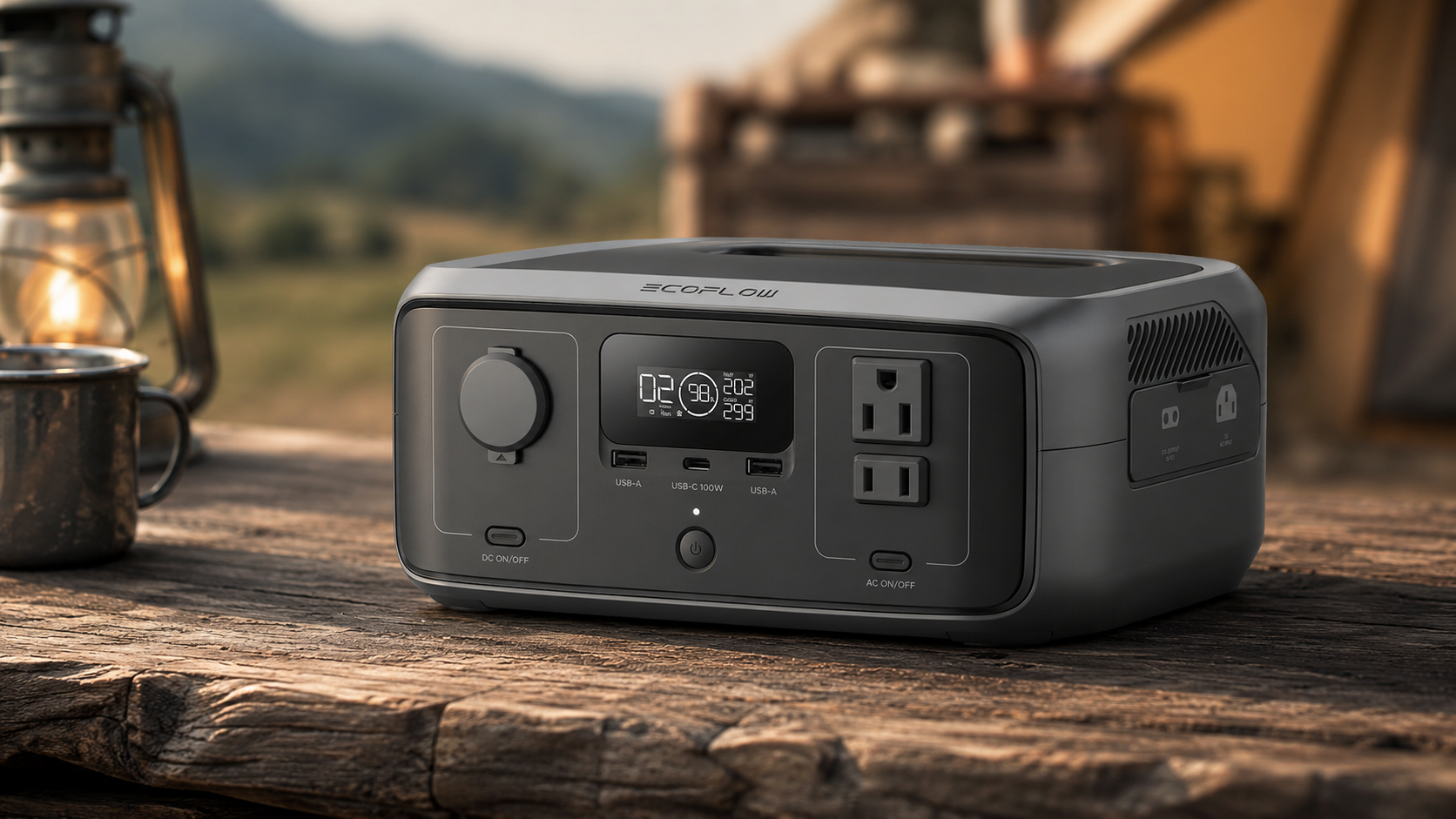
Wall charging via the 60W USB-C input takes approximately 3 hours from empty to full. That’s middling for 2026 — the EcoFlow River 3 does it in 1 hour and the Anker SOLIX C300 in 70 minutes, but meaningfully faster than Jackery’s own reputation would suggest. If you plug it in at breakfast, it’s full by lunch, which is a practical enough turnaround for most use cases.
Car charging via the 12V outlet is slower, taking around 4–5 hours, but useful if you’re driving between campsites and want to arrive with a full station. The math works for road trips where you’re spending 4+ hours in the car anyway.
Solar charging via the MPPT controller accepts up to 100W input. On a clear day with a Jackery SolarSaga 100W panel, expect 5–6 hours to a full charge. Partial cloud cover roughly doubles that time. The MPPT controller does a good job optimizing input automatically, you connect the panel, and it handles the rest.
Ports and Outputs
Six output ports total: two AC outlets (pure sine wave, 300W combined), one USB-C at 60W PD, two USB-A with one supporting Quick Charge 3.0 at 18W, and one 12V car outlet at 10A. That covers most real-world combinations without requiring adapters.
The 60W USB-C output charges most modern laptops at full speed. A MacBook Air, Dell XPS 13, or Lenovo ThinkPad all charge at rated speed through this port. Larger laptops requiring 90W+ will charge more slowly since the port can’t match their preferred wattage.
The USB-C port doubles as the charging input, which means one port handles both charging the station from a wall and charging devices from the station. You can’t do both simultaneously through the same port, but since the station has two separate USB-A ports for device charging while it recharges through USB-C, this is rarely a practical issue.
Battery Chemistry: The Honest Story
This is the part most Explorer 300 reviews gloss over, and it’s the most important thing to understand before buying.
The Explorer 300 uses lithium-ion (NMC) chemistry, not LiFePO4. It’s rated for approximately 500 charge cycles before dropping to 80% of its original capacity. Every other station in our sub-$300 roundup uses LiFePO4 with 3,000+ cycle ratings.
What that means in practice depends entirely on how often you use it. Here’s the honest breakdown:
| Usage Pattern | Explorer 300 (500 cycles) | LiFePO4 Option (3,000 cycles) |
|---|---|---|
| Once a week (camper) | ~10 years | ~57 years |
| 3x per week (frequent user) | ~3 years | ~19 years |
| Daily (van life) | ~18 months | ~8 years |
If you camp on weekends a few times a year, the lithium-ion chemistry is a non-issue; the station will outlast its usefulness on spec improvements alone. If you plan to use it daily or are building a van life power system, spend the extra $50–$70 on a LiFePO4 unit. The long-term math is decisive.
Who It’s Actually For
The Explorer 300 is genuinely well-suited to a specific profile and genuinely wrong for another. Being clear about which one you are saves you either an unnecessary upgrade or an early return.
Buy it if: You camp occasionally on weekends, want an emergency backup station that lives in a closet for outages, travel, and want off-grid device charging, or are buying your first power station and aren’t sure how much you’ll actually use it. At ~$189 on sale, it’s the lowest-risk entry point in the category from a brand with real warranty support.
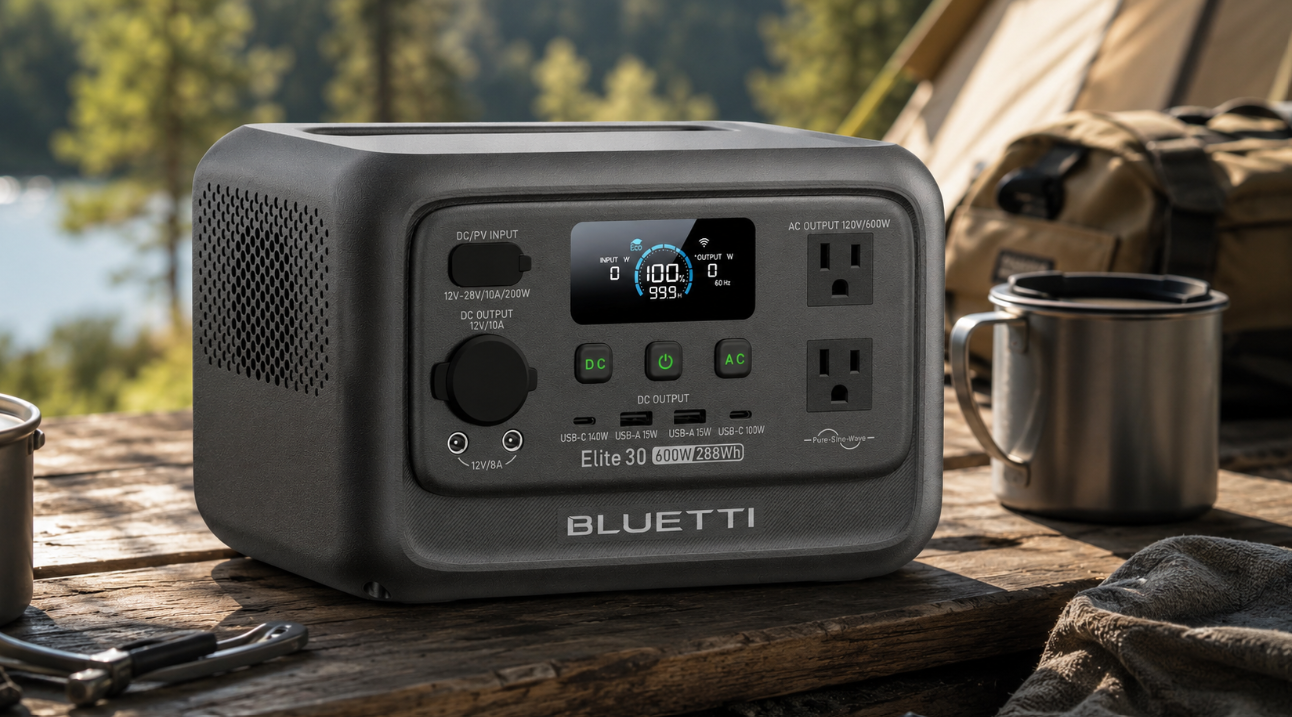
Skip it if: You plan to use it daily, you’re building a van life or off-grid living power system, you need to run appliances with motors (mini fridge, CPAP), or you want app connectivity and remote monitoring. For any of those use cases, step up to the Anker SOLIX C300 or Bluetti Elite 30 V2.
How It Compares
| Jackery Explorer 300 | Anker SOLIX C300 | EcoFlow River 3 | |
|---|---|---|---|
| Capacity | 292Wh | 288Wh | 245Wh |
| Battery | Lithium-ion | LiFePO4 | LiFePO4 |
| Cycle Life | 500 | 3,000+ | 3,000+ |
| Wall Charge | 3 hrs | 70 min | 60 min |
| USB-C Max | 60W | 140W | 60W |
| Surge | 500W | 600W | 600W |
| App Control | No | Yes | Yes |
| Water Resistant | No | No | IP54 |
| Weight | 7.1 lbs | 8.3 lbs | 7.7 lbs |
| Warranty | 2 years | 5 years | 5 years |
| Price | ~$179–$229 | ~$249–$299 | ~$189–$229 |
On pure specs the Explorer 300 loses to both competitors on almost every technical measure. Where it wins is price and weight; it’s the lightest station in the comparison and regularly hits $179–$189 on sale, which is $60–$110 less than the Anker. For buyers who genuinely only need occasional-use performance and are price-sensitive, that gap is real money.
Final Verdict
The Jackery Explorer 300 is a reliable, well-built station that does exactly what it’s designed to do. It’s not the most technically impressive option in 2026 and the lithium-ion battery chemistry is a real trade-off that matters for heavy users. But for occasional campers, first-time buyers, and anyone who needs a grab-and-go station that works without a learning curve, it remains a sensible choice, especially when it hits its regular sale price around $179–$189.
The people who will regret buying it are the ones who underestimate how often they’ll use it. If you find yourself reaching for it multiple times a week, the 500-cycle limit becomes a real cost. In that case, add $60–$70 and get the Anker SOLIX C300. The LiFePO4 chemistry, faster charging, and better ports justify the price difference for any regular user.
✓ Pros
- Lightest option in the sub-$300 category at 7.1 lbs
- 3-hour wall charge via 60W USB-C
- Clean, simple interface – no app required
- Proven Jackery brand with real warranty support
- Solar-ready with MPPT controller built in
- Regularly on sale at $179–$189
✕ Cons
- Lithium-ion not LiFePO4 – 500 cycle limit
- 500W surge is the lowest in this category
- No app connectivity or remote monitoring
- Only 2-year warranty vs 5 years from competitors
- Solar panel sold separately


Leave a Reply