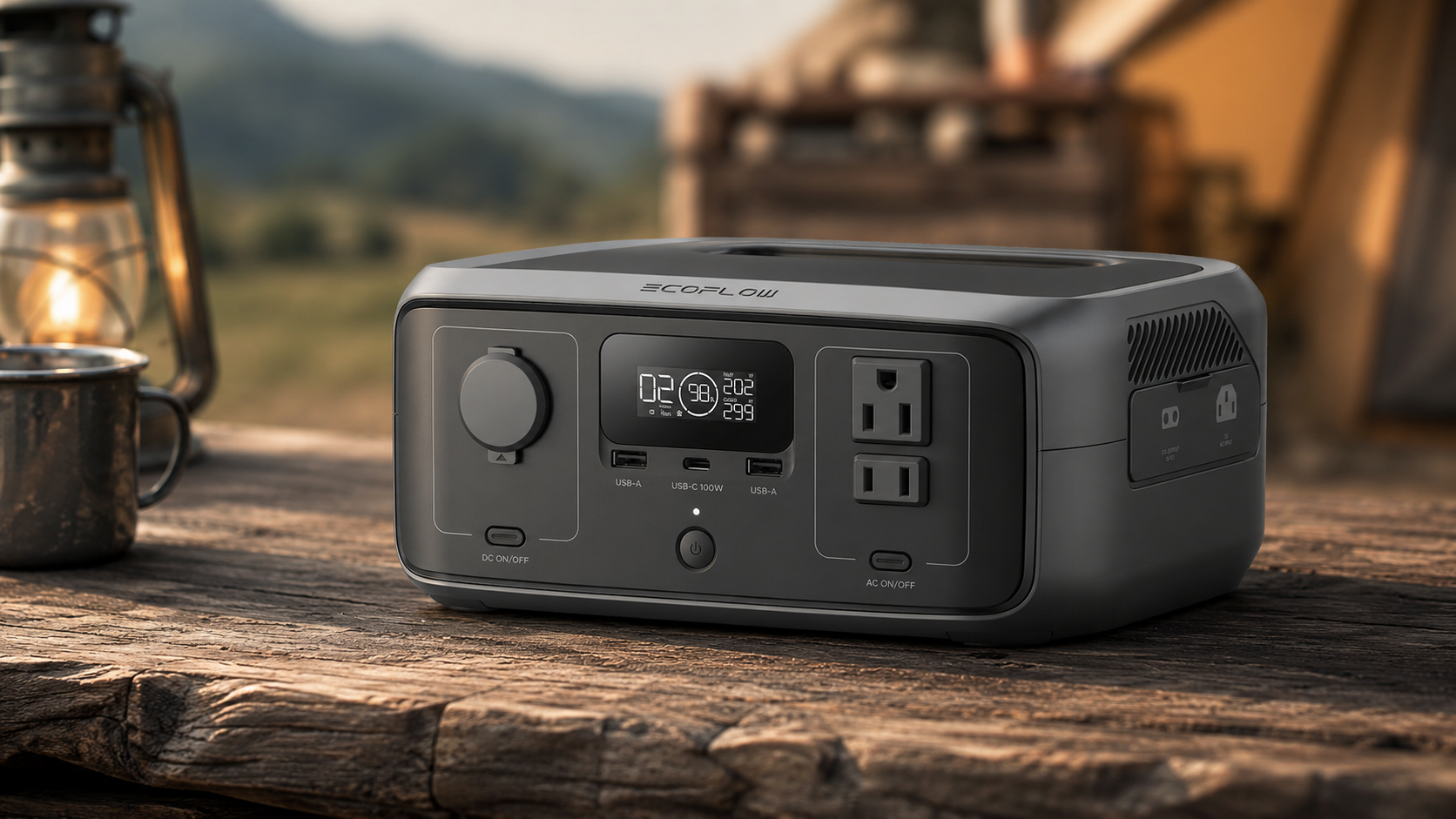

EcoFlow built the River series around a single idea: a power station light enough that you actually bring it with you instead of leaving it in the garage. The River 3 is the clearest expression of that philosophy yet. At under 8 pounds and roughly the size of a small toaster, it is one of the most genuinely portable LiFePO4 stations on the market in 2026, and it regularly sells for under $240.
That portability comes with trade-offs. The 245Wh capacity is the smallest in our sub-$300 roundup, and EcoFlow’s marketing around the X-Boost feature oversells what the 300W inverter can realistically do. But for the right buyer, the River 3 hits a sweet spot that few competitors match: real LiFePO4 longevity, genuinely fast charging, and a weight low enough to carry without thinking about it.
Here is the full breakdown.
📋 In This Review
Quick Specs
| Spec | Detail |
|---|---|
| Capacity | 245Wh |
| Battery Type | LiFePO4 |
| Cycle Life | 3,000+ cycles to 80% capacity |
| AC Output | 300W continuous / 600W X-Boost |
| USB-C Output | 100W PD |
| USB-A Output | 2 ports |
| AC Outlets | 3 x pure sine wave |
| Wall Charge Time | ~60 minutes (0-100%) |
| Solar Input | Max 110W |
| UPS Switchover | Under 30ms |
| Noise Level | Under 30dB |
| Battery Protection | IP54 (battery system only) |
| Weight | 7.8 lbs / 3.5 kg |
| Dimensions | 10″ x 8.3″ x 4.4″ |
| Warranty | 5 years |
| Current Price | ~$189-$239 on Amazon |
Design and Build Quality
The River 3 is built around EcoFlow’s GaN-based design, which keeps it roughly 30% more compact than the category average. In practice that means a unit measuring 10 by 8.3 by 4.4 inches and weighing 7.8 pounds. It is small enough to sit in a backpack side pocket, light enough to carry one-handed across a campsite, and compact enough to store in a kitchen drawer between uses.
Build quality is a clear step up from earlier River generations. The shell feels refined rather than utilitarian, the handle is integrated cleanly into the top, and the GaN design reduces heat and fan noise compared to older models. EcoFlow rates noise at under 30dB, which is library-quiet and genuinely unobtrusive overnight in a tent or a bedroom during an outage.
The three AC outlets are a standout for a unit this small. Most stations in this capacity tier offer two. The third outlet means you can run a laptop charger, a fan, and a string of lights simultaneously without a power strip, which is genuinely useful in a tent or van setup.
Real-World Performance
The 245Wh capacity is honest about what it is: enough for device charging and light loads, not enough for sustained appliance use. In real-world testing, the River 3 ran a 25W fan for nearly 10 hours and charged a smartphone over 20 times on a single charge. For a weekend of keeping phones, a camera, and a laptop topped up, it comfortably covers a day to a day and a half of moderate use.
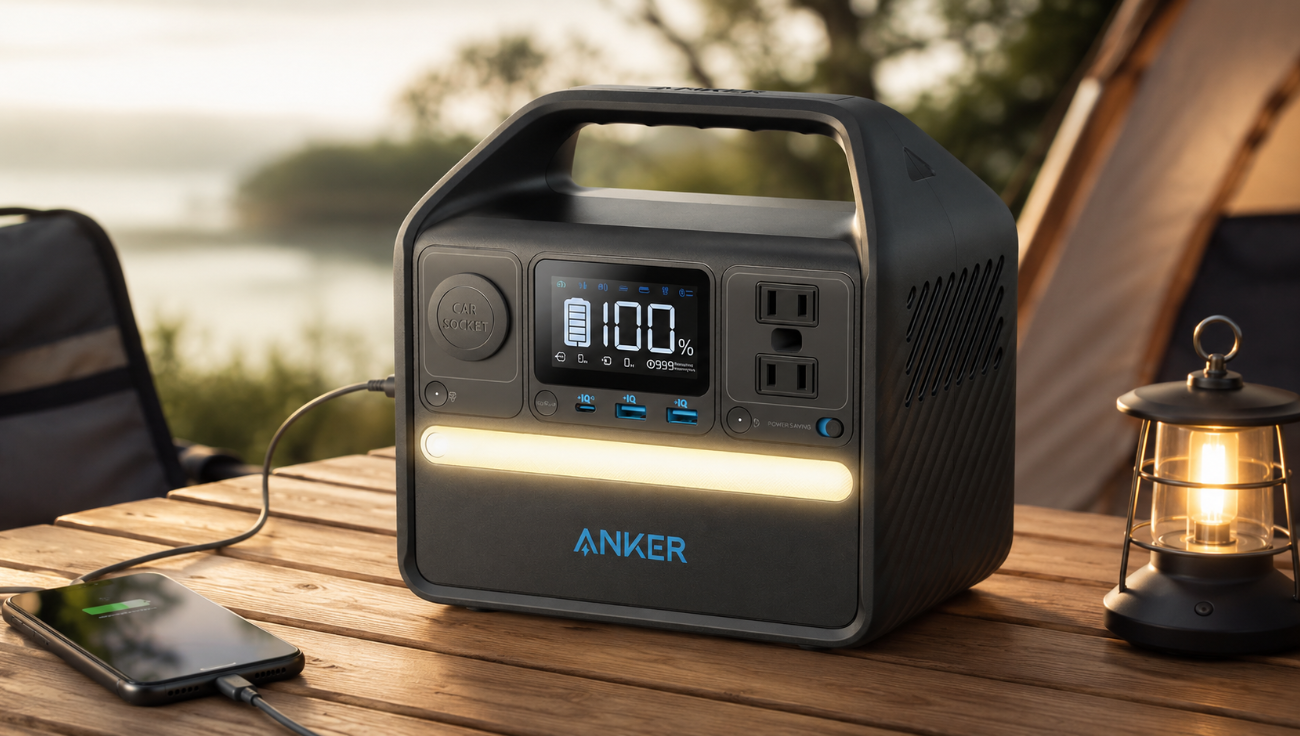
Where the capacity shows its limits is in multi-day use without solar. At 245Wh, this is the smallest battery in our roundup, 43Wh less than the Anker SOLIX C300 and 47Wh less than the Jackery Explorer 300. If you need to power devices across two or more days without a recharge opportunity, the River 3 will leave you rationing power. Pair it with a solar panel and that limitation largely disappears.
For its intended use, light loads, device charging, and short-term backup, the River 3 performs reliably, and the LiFePO4 chemistry means it will keep doing so for years.
Charging Speed
The 1-hour wall charge is the River 3’s headline feature, and it delivers. From empty to full in roughly 60 minutes is among the fastest in the category and meaningfully quicker than the Jackery Explorer 300’s 3-hour charge. If you forget to charge it before a trip, a single hour while you pack gets it to full.
Solar charging accepts up to 110W input. With a compatible 100W panel on a clear day, expect a full recharge in around 3 hours. EcoFlow’s MPPT controller manages input efficiently, and the app shows real-time solar input so you can position panels for maximum charge.
The EcoFlow app is one of the more mature options in the category. It shows charge level, input and output wattage, estimated runtime, and lets you adjust settings like the X-Boost toggle and charge speed remotely. For users who like data, it is a genuine advantage over stations with no connectivity.
Ports and Outputs
The River 3 offers three AC outlets, one 100W USB-C port, two USB-A ports, and a car outlet. The 100W USB-C is a meaningful step up from the Jackery Explorer 300’s 60W port, charging most laptops at full speed, though it falls short of the Anker SOLIX C300’s dual 140W ports.
The single USB-C port is the main port limitation. If you travel with two laptops or a laptop and a USB-C tablet that both need fast charging, you can only fast-charge one at a time. For single-laptop users, this is a non-issue. For households with multiple high-draw USB-C devices, the Anker is the better fit.
Battery Chemistry and Longevity
The River 3 uses LiFePO4 chemistry rated for 3,000+ charge cycles to 80% capacity. That is roughly 10 years of daily use before meaningful degradation, and far longer for the typical buyer who uses it a few times a month. This is the single most important spec separating it from the Jackery Explorer 300, which uses lithium-ion rated for only 500 cycles.
For a unit at this price, LiFePO4 fundamentally changes the value proposition. You are buying a station that will still hold most of its capacity a decade from now, not one that degrades noticeably within a couple of years of regular use. The 5-year warranty backs that up and matches the best in the category.
The X-Boost Question
EcoFlow markets the River 3 as capable of powering devices up to 600W through its X-Boost technology, despite the inverter being rated at 300W continuous. This deserves an honest explanation because the marketing oversells it.
X-Boost works by reducing the voltage delivered to a high-draw device, allowing the 300W inverter to run something rated higher by feeding it less power than it expects. For resistive loads like a basic heating element or a simple kettle, this can work, though the device runs at reduced performance. For devices with motors or sensitive electronics, X-Boost is unreliable and, in some cases, will not work at all.
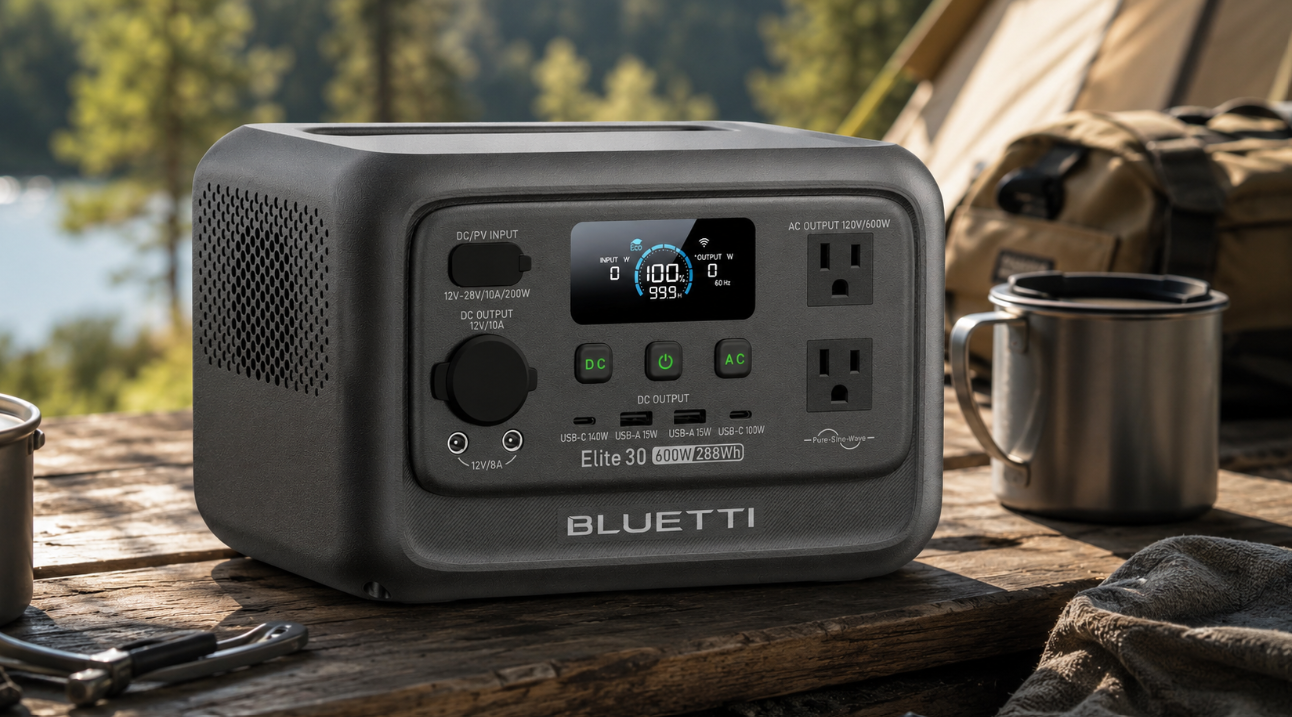
The honest takeaway: treat the River 3 as a 300W station, not a 600W one. X-Boost is a useful occasional fallback for running a slightly-too-large resistive device in a pinch, not a feature to rely on. If you genuinely need 600W of continuous output, the Bluetti Elite 30 V2 delivers it natively without tricks.
The IP54 Water Resistance Clarification
The River 3 is often described as water-resistant, and this needs clarifying because it is partly misleading. The IP54 rating applies to the internal battery system, not the power station as a whole. The unit itself is not waterproof and should be kept dry and shaded during use.
What the IP54 battery protection means in practice is added resilience against dust and moisture intrusion reaching the cells, which is reassuring for outdoor use in variable conditions. But it does not mean you can leave the River 3 out in the rain or use it in wet conditions without care. Treat it like any electronic device: protect it from direct water exposure.
Who It’s Actually For
Buy it if: Portability is your top priority and you want the lightest LiFePO4 station available. You need fast recharging and value the 1-hour wall charge. You want a quiet home office UPS that doubles as a camping companion. You charge devices and run light loads rather than appliances. You want EcoFlow’s mature app for monitoring and control. For these uses, the River 3 is one of the best values in the category.
Skip it if: You need maximum capacity for multi-day use without solar, in which case the Anker SOLIX C300 or Jackery Explorer 300 offer more watt-hours. You need to run genuine 600W appliances, where the Bluetti Elite 30 V2 is the honest choice. You charge multiple laptops simultaneously and need more than one fast USB-C port.
How It Compares
| EcoFlow River 3 | Anker SOLIX C300 | Jackery Explorer 300 | |
|---|---|---|---|
| Capacity | 245Wh | 288Wh | 292Wh |
| Battery | LiFePO4 | LiFePO4 | Lithium-ion |
| Cycle Life | 3,000+ | 3,000+ | 500 |
| Wall Charge | 60 min | 70 min | 3 hrs |
| USB-C Max | 100W x1 | 140W x2 | 60W x1 |
| AC Outlets | 3 | 2 | 2 |
| Weight | 7.8 lbs | 8.3 lbs | 7.1 lbs |
| App Control | Yes | Yes | No |
| Warranty | 5 years | 5 years | 2 years |
| Price | ~$189-$239 | ~$169-$249 | ~$179-$229 |
Against the Anker SOLIX C300, the River 3 wins on charge speed, AC outlet count, and weight, but loses on capacity and USB-C ports. Against the Jackery Explorer 300, the River 3 wins decisively on battery chemistry, charge speed, and app control, trading only a small amount of weight and capacity. For buyers who prioritize portability and fast charging over raw capacity, the River 3 is the pick. For maximum capacity and best-in-class USB-C charging, the Anker is the stronger all-rounder.
Final Verdict
The EcoFlow River 3 is the best choice in the sub-$300 category for buyers who value portability and charging speed above raw capacity. The LiFePO4 battery, sub-1-hour recharge, three AC outlets, mature app, and library-quiet operation make it a genuinely refined little station. At its frequent sale price under $200, it is one of the better values in portable power.
The two things to go in clear-eyed about: the 245Wh capacity is the smallest in this class, so multi-day use needs solar, and the X-Boost marketing oversells what the 300W inverter can do. Treat it as a portable, fast-charging 300W station, and it will not disappoint. Expect a 600W appliance workhorse, and you bought the wrong unit.
✓ Pros
- LiFePO4 battery rated for 3,000+ cycles
- Sub-1-hour wall charging
- Three AC outlets, more than rivals at this size
- Lightweight at 7.8 lbs
- Mature EcoFlow app with real-time monitoring
- Under 30dB operation
- 5-year warranty
✕ Cons
- 245Wh is the smallest capacity in this class
- X-Boost overstates real-world output capability
- Only one fast USB-C port
- IP54 covers the battery only, not the whole unit
- Solar panel sold separately


Leave a Reply